 Agardwood Plant
Description
Agarwood Plant – Detailed Information, Cultivation, Benefits and Plantation Guide
Introduction to Agarwood Plant
The Agarwood Plant is one of the most valuable aromatic tree species cultivated for its highly fragrant heartwood. The Agarwood Plant belongs mainly to the genus Aquilaria, with several species producing commercially important agarwood. The Agarwood Plant is particularly valued for its aromatic resin, which is used in perfumes, incense, traditional products, and premium fragrance preparations.
The Agarwood Plant is a tropical evergreen tree that can be cultivated in suitable warm and humid climates. Because of the high value associated with quality agarwood, the Agarwood Plant has attracted interest from farmers, plantation owners, agroforestry growers, and nursery businesses.
What is an Agarwood Plant?
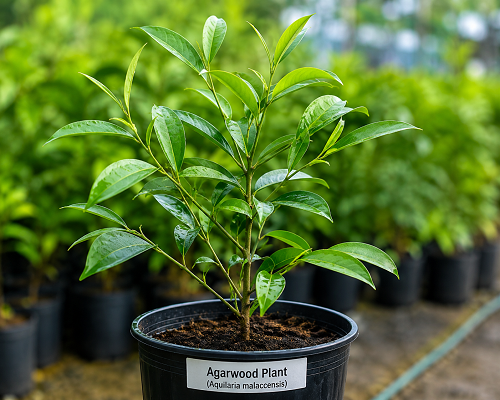
An Agarwood Plant is a young sapling of an Aquilaria species that can eventually develop into a mature aromatic tree. Healthy Agarwood Plants generally have a straight stem, vigorous foliage, a strong root system, and good overall plant health.
The commercially valuable material associated with the Agarwood Plant is not simply ordinary wood. High-quality agarwood develops when certain Aquilaria trees respond to biological or physical stress by producing resin-rich wood. Therefore, the value of an Agarwood Plant depends on the species, plantation management, tree health, environmental conditions, and the development of resinous heartwood.
Features of Agarwood Plant
The Agarwood Plant has several characteristics that make it attractive for plantation cultivation:
- The Agarwood Plant is a tropical evergreen tree.
- Agarwood Plants generally prefer warm and humid conditions.
- A healthy Agarwood Plant can develop a strong and tall stem under suitable conditions.
- The leaves are generally green, smooth, and elongated.
- The Agarwood Plant can be incorporated into suitable agroforestry systems.
- The tree is primarily valued for aromatic resinous heartwood.
- Proper plantation management is important for maintaining healthy Agarwood Plants.
Climate Requirements for Agarwood Plant
Climate is an important factor when growing an Agarwood Plant. Agarwood-producing Aquilaria species naturally occur in tropical and subtropical regions of Asia. The Agarwood Plant generally performs well in warm conditions with adequate moisture.
A plantation intended for Agarwood Plants should have appropriate rainfall or irrigation facilities. Extreme cold, prolonged drought, waterlogging, or unsuitable climatic conditions can negatively affect plant establishment.
Before planting an Agarwood Plant, farmers should evaluate local temperature, rainfall, humidity, soil characteristics, drainage, and availability of irrigation.
Soil Requirements for Agarwood Plant
A well-drained soil is important for healthy Agarwood Plant growth. The soil should allow the roots to receive adequate oxygen while retaining sufficient moisture.
Suitable soils for an Agarwood Plant may include fertile loam and other well-drained soils with good organic matter. Heavy waterlogged soils should generally be avoided because prolonged standing water can damage the root system.
Soil testing before establishing an Agarwood Plant plantation can help determine pH, nutrient availability, organic matter, and other important characteristics.
Selection of Quality Agarwood Plant
Selecting good planting material is one of the most important steps in establishing an Agarwood Plant plantation.
When purchasing an Agarwood Plant, look for:
- Healthy green foliage
- Strong and well-developed roots
- Straight and healthy stems
- No visible pest infestation
- No major fungal damage
- Properly hardened nursery plants
- Correct botanical identification
- Plants suitable for the local climate
A healthy Agarwood Plant generally establishes more easily after transplantation when properly handled.
Planting Agarwood Plant
The land should be prepared before planting an Agarwood Plant. Remove unwanted vegetation and prepare suitable planting pits according to soil conditions and the recommended plantation system.
Organic manure or well-decomposed compost can be incorporated into the planting pit where appropriate. The Agarwood Plant should be transplanted carefully without damaging its root ball.
After planting, irrigation should be provided according to local weather and soil moisture. Newly planted Agarwood Plants require particular attention during the establishment period.
Spacing for Agarwood Plant Plantation
Plant spacing for an Agarwood Plant plantation depends on the species, soil fertility, plantation objective, management system, and intercrops.
Closer spacing can increase the number of Agarwood Plants per unit area, while wider spacing can provide individual trees with more growing space. Farmers should select spacing based on professional forestry or horticultural recommendations applicable to their region.
There is no single spacing formula that is ideal for every Agarwood Plant plantation.
Water Management for Agarwood Plant
Water management is essential during the early establishment of an Agarwood Plant. Young plants should receive adequate moisture, particularly during dry periods.
At the same time, excessive irrigation should be avoided. Waterlogged conditions can reduce root health and negatively affect the growth of an Agarwood Plant.
Mulching around young Agarwood Plants can help conserve soil moisture and suppress unwanted weeds.
Fertilizer and Nutrition for Agarwood Plant
A balanced nutrition program can support healthy Agarwood Plant growth. The exact fertilizer requirement depends on soil fertility, plant age, rainfall, and plantation conditions.
Organic manure, compost, and suitable fertilizers may be used according to soil-test recommendations. Excessive fertilizer application should be avoided because more fertilizer does not necessarily mean better Agarwood Plant growth.
Regular observation of foliage, stem development, and overall plant health can help identify nutritional problems.
Weed Management in Agarwood Plant Plantation
Weeds compete with young Agarwood Plants for water, nutrients, sunlight, and growing space. Keeping the area around young plants relatively weed-free is therefore important.
Manual weeding, mulching, and appropriate cultural practices can be used for Agarwood Plant plantations. Weed-control methods should be selected carefully so that young Agarwood Plants and their roots are not damaged.
Pest and Disease Management
Like other plantation trees, the Agarwood Plant can be affected by pests and diseases. Regular inspection is important for early detection.
Farmers should monitor Agarwood Plants for:
- Leaf damage
- Stem damage
- Root problems
- Unusual leaf discoloration
- Fungal symptoms
- Insect infestation
- Poor or abnormal growth
Integrated pest management should be preferred, with chemical treatments used only when necessary and according to local agricultural recommendations.
Why Grow Agarwood Plant?
The Agarwood Plant has attracted attention because of the commercial importance of agarwood and its aromatic products. A properly managed Agarwood Plant plantation can become part of a long-term agroforestry or commercial forestry strategy.
However, farmers should understand that agarwood production is a long-term process and that the presence of an Agarwood Plant does not automatically guarantee production of high-value resinous wood.
Plantation success depends on species selection, climate, soil, management, tree health, and appropriate production practices.
Uses of Agarwood Plant
The primary commercial importance of the Agarwood Plant comes from agarwood and its aromatic resinous material.
Products associated with agarwood may be used in:
- Premium perfumes
- Fragrance products
- Incense
- Traditional aromatic preparations
- Cultural and religious applications
- Essential-oil and fragrance industries
The value of material obtained from an Agarwood Plant varies greatly depending on quality, origin, resin content, processing, market demand, and authenticity.
Agarwood Plant and Long-Term Plantation
An Agarwood Plant should be viewed as a long-term plantation crop rather than a quick-return plant. Farmers interested in Agarwood Plant cultivation should prepare a plantation plan covering land preparation, planting material, irrigation, nutrition, weed control, pest management, harvesting strategy, processing, and marketing.
Before investing in a large number of Agarwood Plants, growers should also investigate local laws and regulations governing cultivation, harvesting, transportation, and sale of Aquilaria species and agarwood products.
Buying Quality Agarwood Plant
When you want to buy an Agarwood Plant, always purchase from a reliable nursery and ask for proper information about the species and planting material.
A good nursery should be able to provide healthy Agarwood Plants and appropriate guidance regarding planting, watering, soil, spacing, and initial care.
Avoid purchasing unidentified plants simply because they are advertised as high-value Agarwood Plants. Correct species identification and healthy nursery stock are important for establishing a successful plantation.
Agarwood Plant for Farmers
For farmers considering commercial forestry, the Agarwood Plant can be evaluated as one possible component of a diversified plantation system. Farmers should consider land availability, local climate, irrigation, plantation duration, market access, and legal requirements before investing.
The Agarwood Plant may also be considered alongside other timber and agroforestry species rather than depending on a single crop.
Conclusion
The Agarwood Plant is an important aromatic tree associated with the production of valuable agarwood. With appropriate climate, soil, irrigation, nutrition, and plantation management, healthy Agarwood Plants can be established in suitable regions.
For anyone interested in growing an Agarwood Plant, the most important factors are quality planting material, correct species identification, suitable environmental conditions, proper maintenance, and a realistic long-term plantation plan.
If you are planning to purchase an Agarwood Plant, choose healthy nursery-grown saplings and obtain reliable cultivation guidance before establishing your plantation. A carefully managed Agarwood Plant plantation can become a valuable component of sustainable forestry and agroforestry when cultivated responsibly and in accordance with applicable regulations.


Reviews
There are no reviews yet.